If you work in technology long enough, every new framework starts to sound like “yet another API layer.” The Model Context Protocol (MCP) is different. It’s not a product, and it’s not tied to any one vendor or model. It’s an open standard for how AI apps talk to tools and data providing a standardized, model-agnostic way for AI apps to access external tools and data.
Continue reading “A Network Engineer’s Guide to Understanding the Model Context Protocol for AI Integration”Is Cisco’s Unified Edge A Step Toward Agentic AI at the Edge or Just Clever Packaging?
Cisco’s latest announcement at Partner Summit 2025 introduced Cisco Unified Edge, a converged compute platform designed to bring agentic and inferencing AI workloads closer to where data is actually generated, such as the branch, the factory, the retail floor, or the hospital wing. The idea is that instead of sending massive data streams back and forth to the data center or cloud, we can perform inference and decision-making locally for faster responses, lower bandwidth requirements, and higher resilience.
It’s an interesting, ambitious, and I think logical idea that extends Cisco’s networking footprint into edge computing and AI infrastructure, which are arguably two of the fastest-moving segments in enterprise IT.
Read more: Is Cisco’s Unified Edge A Step Toward Agentic AI at the Edge or Just Clever Packaging?What is Cisco Unified Edge
Unified Edge isn’t just a server, at least not in Cisco’s public positioning. It’s a modular, converged system combining compute, storage, and networking in a single chassis. It supports both CPU- and GPU-based configurations for real-time AI workloads, with redundant power and cooling, SD-WAN connectivity, and pre-validated blueprints for specific industries.
The platform integrates with Cisco Intersight for centralized management, ThousandEyes and Splunk for observability, and built-in Zero Trust controls down to the device level. Basically, Cisco wants to make managing hundreds or thousands of AI-enabled edge nodes as simple as managing Meraki devices.
Under the hood, Unified Edge builds on the UCS X-Series chassis with a modular backplane supporting high-bandwidth 25Gbps interconnects, optional GPU nodes, and Intel Xeon 6 processors optimized for native AI inference. Networking and compute modules communicate through an integrated fabric interconnect that allows for unified policy enforcement and telemetry collection without needing additional hardware appliances. The design adds to UCS X’s use-cases and applications and integrates directly with Cisco Intersight for lifecycle management, firmware updates, and fleet orchestration.
Cisco emphasizes agentic AI (which they define as multi-agent systems capable of autonomous decisions and collaboration between models) as a workload that will thrive at the edge where latency and data locality matter the most. In essence, Unified Edge is meant to give those agents the hardware and connectivity they need without sending every decision back to the cloud.
From a data pipeline perspective, Unified Edge supports model deployment through containerized runtimes using Kubernetes and Red Hat OpenShift, but also with the option to use Cisco’s Intersight Kubernetes Service (IKS). For AI frameworks, Cisco and Intel officially validated OpenVINO and TensorRT for low-latency inference, the idea being that it enables edge-resident models to run independently or as agents within distributed inference tasks connected back to cloud LLMs.
Each chassis includes Cisco’s Trust Anchor module for verified boot and hardware attestation, signed firmware updates via Intersight, and native segmentation using SD-WAN policies. Unified Edge also enforces per-application zero-trust profiles, integrating with Duo and SecureX for identity-based access control. This addresses the ever-present concern around compliance and protection even when deployed in semi-trusted environments like retail locations or healthcare.
One thing that’s interesting is how Cisco frames agentic AI. They explain that running an agentic AI system at the edge doesn’t simply mean running models locally – it means orchestrating multiple specialized agents (for example, a computer-vision model, a telemetry analyzer, and a policy agent) that collaborate in near-real time. Unified Edge’s low-latency inter-node communication and modular compute fabric allow these multi-agent systems to make distributed decisions, but at the same time maintain global context through a form of cloud synchronization.
According to Cisco, Unified Edge can reduce inference latency by up to 70% compared to cloud-round-trip execution, and lower WAN traffic by 40-60% for agentic workloads. Each chassis supports up to four AI accelerators and 400 Gbps aggregate throughput, which should be sufficient to run current high-density edge deployments.
Why this Matters to AI at the Edge
The timing makes sense since we’re all learning that AI inference traffic looks nothing like traditional workloads. It’s heavier, more continuous, and often requires sub-second response times. According to Cisco, AI agents generate up to 25X more network traffic than chatbots. That’s a big deal when trying to push inference to thousands of distributed locations.
Edge-optimized architectures like Unified Edge could help reduce latency and cost while allowing for real-time use cases like predictive maintenance on a factory line, automated fraud detection at bank branches, or personalized in-store experiences powered by local AI models. These are activities many larger, more technically progressive organizations already do, but with Unified Edge the idea is that more organizations than ever can take advantage of both traditional MLOps and modern AIOps workflows.
Is It Real or Just Marketing?
Technically, I think this is certainly viable, but it’s not really revolutionary. HPE, Dell, Lenovo, and even NVIDIA have been building edge AI nodes and converged systems for a long time. What Cisco brings to the table is not that it’s new technology, but that they provide tight integration and the fact that everyone in networking knows Cisco.
The question is whether enterprises want to buy AI-ready infrastructure from their network vendor, or continue blending specialized compute, storage, and networking products. Cisco’s unified approach may appeal to organizations that value simplicity and end-to-end support, which was definitely my experience with many enterprises over the years, but I think skeptics might see this as repackaging existing technology into a new acronym-worthy category.
That being said, the focus on agentic AI is definitely forward-looking. If enterprises begin deploying autonomous AI systems that need to act instantly and securely at distributed sites, a unified edge architecture like Cisco’s could be absolutely the best way to go. That’s why I think the success of Unified Edge will depend less on specific hardware, speeds, and feeds, and more on ecosystem execution like integrations, ease of deployment, and (of course) pricing.
Conclusion
I don’t think Cisco Unified Edge is vaporware. It’s a thoughtful convergence of compute, networking, and security specifically designed for where we’re going with AI. Whether it becomes foundational to distributed AI or fades into tech history as not much more than a marketing play will depend on industry adoption, not press releases and announcements.
But when we look out at the landscape of how organizations are actually implementing AI inference at scale in operational contexts, Cisco deserves credit for pushing the conversation beyond cloud-only AI. Cisco didn’t reinvent the server, but it’s one of the first credible architectures to merge networking, observability, and AI orchestration into a unified control plane which I believe is an important step if distributed AI is ever going to scale.
For further reading, here are a few of the resources I used for this post:
https://www.cisco.com/site/us/en/products/computing/unified-edge/index.html
Thanks,
Phil
The Goal of AI in ITOps is Operational Improvement
I’ve been speaking with more folks again recently about AI initiatives in their IT organizations. Most recently it was a systems team that ran the on-prem server infrastructure, Azure environment, and just recently also tasked with end-user computing.
What struck me in the conversation was how the discussion kept going back to AI. That might seem weird for me to say considering the goal was to discuss AI initiatives, but let me explain.
AI is a technology; it’s a tool. Yes, I understand that in reality AI is a complex and sophisticated family of technologies, but ultimately it’s still a tool. So unless you’re literally building models and live in academia or the world of R&D, AI is not a goal unto itself. Starting with AI was the wrong approach in the discussion with this systems team, and it’s usually the wrong approach for any team.
For most of us in our respective niche of IT operations, the goal of AI is operational improvement.
Continue reading “The Goal of AI in ITOps is Operational Improvement”Three Critical Questions Before You Consider AI in NetOps
A few months ago I read Kavita Ganesan’s excellent book, The Business Case for AI: A Leader’s Guide to AI Strategies, Best Practices & Real-World Applications. I highly recommend it to anyone thinking critically about implementing an AI solution in IT operations because the concepts and best practices she outlines helped me to think more practically about implementing AI solutions in IT operations.
Continue reading “Three Critical Questions Before You Consider AI in NetOps”AI in NetOps is not about replacement – it’s about evolution
A good friend of mine is an electrical engineer for a well-known passenger train company in the United States, and we recently talked about how his job, his entire career, has taken a turn from traditional electrical engineering to computer systems integrations and building telemetry pipelines. In other words, as the industry progressed, he wasn’t replaced. Instead, his role evolved.
That probably isn’t a groundbreaking revelation considering almost every industry has been impacted by some form of digitization. Things change, and people adapt. However, what really intrigued me was the new initiative to use AI to augment the train management system.
Continue reading “AI in NetOps is not about replacement – it’s about evolution”Using an LLM to Query Structured Network Telemetry
One practical use-case for using large language models in network operations is to help query large datasets of network telemetry faster and more easily by using natural language. This can improve NetOps and facilitate better data-driven insights for engineers and business leaders. However, the volume and nature of the data types we commonly utilize in networking makes this a daunting workflow to build, hence the dichotomy of build vs. buy.
There are network vendors building natural language query tools for network telemetry, and so it’s important to understand the value, components, and fundamental workflow whether you’re researching vendors or building your own proof of concept.
A reasonable approach, even just to experiment, is to start very simple, such as querying only one data type. That way, we can ensure accuracy and see meaningful results right away. In time, we can build on this initial workflow to include more types of data, perform more advanced analytics, and automate tasks.
Continue reading “Using an LLM to Query Structured Network Telemetry”Beginner’s Guide for Using Large Language Models in Network Operations
Large language models like GPT, Claude, Llama, and others have the potential to transform network operations. We’re familiar with how they help us generate code, summarize texts, and answer basic questions, but until recently their application to network operations has been suspect. However, it was just a matter of time until we understood the use-cases and how to mitigate some of the initial problems like hallucinations and data privacy.
I believe there are two main use-cases right now, with a third right around the corner. First, LLMs can query large and diverse datasets of network telemetry faster than any engineer, which in turn reduces resolution time and increases network performance and reliability. Second, as part of a larger workflow, LLMs can help us perform advanced analysis on network telemetry thereby providing greater insight and understanding of what is otherwise a complex web of varied telemetry data. And in the near future, agentic AI, which is really an extension of my second use case, will help us automate tasks and more autonomously manage network operations.
In this post we’ll discuss the first two use-cases and touch on the third. We’ll also unpack some of the limitations we face implementing LLMs in NetOps, and we’ll discuss several quick and easy ways to get started right now.
Continue reading “Beginner’s Guide for Using Large Language Models in Network Operations”Packets
Hey networking community!
To get you through another week of cutovers, pcaps, and folks blaming the network when it’s yet another DNS issue, I made this song parody just for you 🙂
It’s called Packets, based on one of the best songs to hit the airwaves in February 1996, and in my humblest of opinions, it’s the perfect soundtrack for your next 2am change window…
Enjoy!
(the lyrics are in the post for your viewing convenience)
10 Books Every Network Engineer Should Read
These are 10 books that have been foundational for me personally in my career as a network engineer. I left out the Cisco CCNA, CCNP, and CCIE textbooks, though they were all mostly fantastic. However, this list below has been great for me as foundational networking knowledge in a well-written format.
Toward the bottom are several books that I’ve read much more recently, including books about network automation and machine learning in networking. Personally, for anyone seeking to get into network engineering or to become a more well-rounded networking professional, I recommend topics around automation and ML as well.
Continue reading “10 Books Every Network Engineer Should Read”From Manhattan to the Mohawk with the Upstate (NY)NUG
You can split New York State into several regions, though the exact areas are often hotly debated depending on if you say soda, pop, or know all too well what time the last train leaves Penn Station. When Zig Zsiga and I started the New York Networking Users Group, the idea was to continue with the existing (NY)NUG which had one successful event in Manhattan. But after thinking about it, I thought it would be great to start multiple chapters around the state to accommodate all those crazy different accents (seriously – every region in New York State has a different accent and I love it).
And thus began a brand new chapter of the (US)NUA: the Upstate (NY)NUG.
Continue reading “From Manhattan to the Mohawk with the Upstate (NY)NUG”Best Practices for Enhancing BGP Security
BGP is the de facto routing protocol for inter-domain routing, or in other words, the global internet. It’s used to exchange routing information among autonomous systems around the entire world. Therefore, it’s extremely important we do what we can to secure BGP communications, what we advertise, and the methods we use to create peering relationships. However, BGP is decentralized in nature and generally built on trust between BGP peers making it difficult to secure and a popular attack vector.
For this post, I’ll focus on two main threats to BGP security and several (but not all) methods we can use to mitigate BGP security incidents.
Continue reading “Best Practices for Enhancing BGP Security”What is a valley-free violation?
In the context of BGP, a valley-free violation is when routing policy governing BGP path selection and advertisement breaks the valley-free policy. The valley-free routing policy basically ensures traffic doesn’t traverse unintended autonomous systems, usually a customer AS downstream from a service provider, and therefore an unintentional transit network.
Continue reading “What is a valley-free violation?”The (US)NUA – A New Networking Community
I love the networking community, and I attribute much of my success as a network engineer, network architect, and now a technical marketer, to the interactions I’ve had with other network pros over the years. That’s meant interaction on Twitter, Reddit, the big conferences, and the small events like Tech Field Day. From those sprang up private Slack and Discord groups, the occasional iMessage or Google Hangouts group, and so on.
That changed significantly during the pandemic. Both the large and small conferences, meetups, and even company events stopped altogether and didn’t come back for a few years. And when they did, they were different. I noticed the large events weren’t as large (although I’m always shocked by how many people are at re:Invent), and the hybrid conference idea didn’t work for me. I missed the days of attending sessions, chatting with people over coffee in between keynotes, grabbing drinks in the evening with old nerd-friends, and getting to interact in person, engineer-to-engineer.
We needed a new networking community.
Continue reading “The (US)NUA – A New Networking Community”A Breakdown of MELT for Observability
Here’s a short breakdown of MELT, which stands for metrics, events, logs, and traces. These are the four most basic data types used for network and system telemetry. There are other data types that are widely used and very useful in a robust observability solution, though I would argue some are just another form of one of these general data types.
These data types are used in system monitoring in general, but are very valuable in observability. Metrics, events, logs, and traces have most commonly been the cornerstone of application and system observability, but today they also form key components of the telelemtry used for network observability.
Continue reading “A Breakdown of MELT for Observability”10 Networking Tools to Keep in Your Bag
I was a VAR network engineer for years. I worked on location in data centers and network closets to install network gear, perform various types of cutovers, and troubleshoot network problems. Even when I moved to a solutions architect role, I always kept several items with me at all times in my laptop bag when going on-site, just in case. Some items are obvious, and some I carried because I got burned when I didn’t have it with me that one time.
If you’re a network engineer managing your own network or your customers’ network, here’s a list of 10 networking tools that you should consider keeping in your bag.
Continue reading “10 Networking Tools to Keep in Your Bag”Top 7 Network Engineering Conferences Ranked
Here’s a list of my favorite networking-focused events ranked with number 1 being the best. “Best” means a conference or event that either had a ton of relevant networking content for me personally or that helped me directly in my career (for example, I’ve never been focused on storage at all – therefore you won’t see those events that on my list).
So if you’re in the networking field like me, check out these events and feel free to disagree in the comments or on the socials 🙂
Continue reading “Top 7 Network Engineering Conferences Ranked”Five Ways to Jump Start Your Career in Tech in 2021
I’ve been in tech long enough to know what’s worked for me as far as growing my career as a network engineer. So looking at the networking industry today in early 2021 and looking back at what’s worked for me, I’d like to share five things I believe can help you take your career in tech to the next level.
Continue reading “Five Ways to Jump Start Your Career in Tech in 2021”Where is Intent Based Networking in 2021?
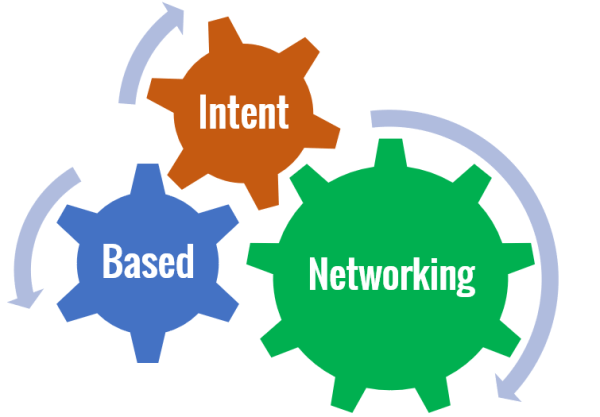
Intent Based Networking certainly became a popular term over the last couple years. I don’t hear about it much anymore in terms of new and upcoming tech, though. I hear the term being used almost as a side comment when vendors say things like, “oh yeah we do intent based networking – it’s built right into our GUI.”
So after all the marketing hype, the buzzword bingo, and as much digital transformation as we can stomach, where are we with intent based networking in 2021?
Continue reading “Where is Intent Based Networking in 2021?”Best Way to White Balance Your Video In-Camera
I guess I should start with a disclaimer. I don’t know if this is actually the best way to white balance a video in camera. All I know is that I’m an amateur, and I’ve struggled with nailing down the white balance on my videos for a while. After someone showed me this method, my white balance is almost perfect every time right out of the camera.
Continue reading “Best Way to White Balance Your Video In-Camera”