Large language models like GPT, Claude, Llama, and others have the potential to transform network operations. We’re familiar with how they help us generate code, summarize texts, and answer basic questions, but until recently their application to network operations has been suspect. However, it was just a matter of time until we understood the use-cases and how to mitigate some of the initial problems like hallucinations and data privacy.
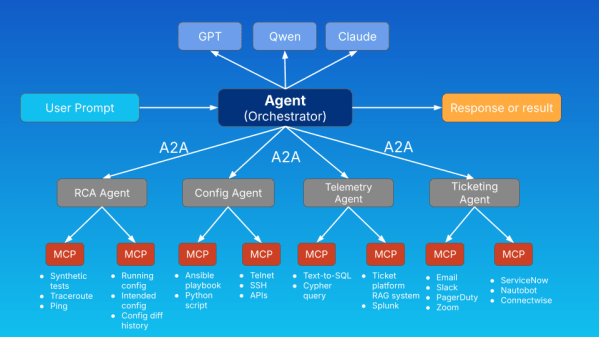
I believe there are two main use-cases right now, with a third right around the corner. First, LLMs can query large and diverse datasets of network telemetry faster than any engineer, which in turn reduces resolution time and increases network performance and reliability. Second, as part of a larger workflow, LLMs can help us perform advanced analysis on network telemetry thereby providing greater insight and understanding of what is otherwise a complex web of varied telemetry data. And in the near future, agentic AI, which is really an extension of my second use case, will help us automate tasks and more autonomously manage network operations.
In this post we’ll discuss the first two use-cases and touch on the third. We’ll also unpack some of the limitations we face implementing LLMs in NetOps, and we’ll discuss several quick and easy ways to get started right now.
Continue reading “Beginner’s Guide for Using Large Language Models in Network Operations” →


 {networkphil}