10 Books Every Network Engineer Should Read

These are 10 books that have been foundational for me personally in my career as a network engineer. I left out the Cisco CCNA, CCNP, and CCIE textbooks, though they were all mostly fantastic. However, this list below has been great for me as foundational networking knowledge in a well-written format.

Toward the bottom are several books that I’ve read much more recently, including books about network automation and machine learning in networking. Personally, for anyone seeking to get into network engineering or to become a more well-rounded networking professional, I recommend topics around automation and ML as well.

Continue reading “10 Books Every Network Engineer Should Read”
Remember the Big Picture

I have the luxury and privilege to work on some very interesting projects. Sometimes it’s advanced routing, sometimes it’s working with brand-new technology, and sometimes it’s a very interesting and unique use case.

However, it never ceases to amaze me that some the most important skills and technical knowledge I’ve gained over the years is understanding how to calculate a power budget for an IDF, the difference between an L620P and 620P cord, the difference between various types of fiber, and remembering to ask my customer about the direction of airflow in their data center.

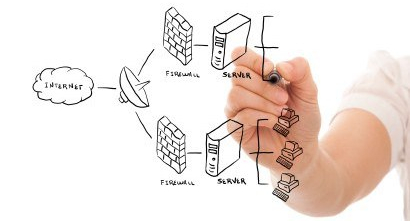
When designing real-world networks, it really is the overall picture we have to keep in mind. Speeds and feeds, bits and bytes, and all the syntax in the world isn’t enough to properly design a real-work network that you can actually power on and plug into.

Thanks,

Phil

Machine Learning and Networking (video)


Machine learning. Sounds like something out of a science fiction movie, right? It’s a term used a lot in technology today, and the high level concept isn’t new it all – we’re actually taking advantage of machine learning all the time. But what does machine learning have to do with networking?

Continue reading “Machine Learning and Networking (video)”

Whitebox Switching at the Access Layer

Whitebox switches make use of generic and generally inexpensive hardware along with a network operating system that can be purchased and installed separately. Often the hardware and software come from different vendors, and there are several reasons this practice is becoming more common especially in the data center. What I’m interested in lately is how this is relevant to the non-webscale enterprise.

Continue reading “Whitebox Switching at the Access Layer”

By Engineers, For Engineers

If you haven’t heard, the networking community is awesome. I’ve made some great friends, developed strong new relationships, and I’ve had the incredible luxury to bounce ideas off some seriously talented people. However, whether it’s through various Slack groups, Google hangouts, or private email chains, it’s all been relatively private. Not much makes its way onto Twitter, and not as much as I’d like makes it into blog posts.

Continue reading “By Engineers, For Engineers”

TELoIP at Networking Field Day 15

No Networking Field Day would be complete without a presentation from an SD-WAN vendor. The technology is now established and maturing into a ubiquitous WAN solution across small and large enterprises alike, so at the upcoming Networking Field Day 15, I’ll be focused on how TELoIP, one of the presenters at the event, differentiates itself from its competitors.

Continue reading “TELoIP at Networking Field Day 15”

BGP Default Route Failover Using Reachability

Sometimes political, financial, or logistical hurdles determine how we solve networking problems. In these tricky situations we may not be able to solve the problem the way we’d prefer, but we still need to solve the problem.

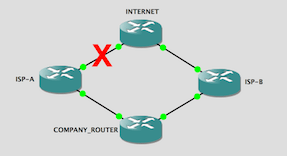
In this post I’m going to look at how we can solve a WAN failover scenario when we have a default route learned from both of our service providers and a reachability problem via our primary ISP.

Continue reading “BGP Default Route Failover Using Reachability”

Amazon S3 Outage: We’ve All Been There

I’ve been thinking a little bit about the Amazon S3 incident. Not really the incident, actually, but the responses to it. More than once I read something along the lines of “I’m sure that guy got fired” with regard to the engineer who entered the fatal command.

Sure, that’s kind of funny for a quick tweet or in the greater context of a blog post on change control, but for me, I’m not sitting at my desk shaking my head right now. Instead, I’m reminded about the times I did the exact same thing (on a much smaller scale) and will probably do it again.

Continue reading “Amazon S3 Outage: We’ve All Been There”

My Network Cutover Soundtrack

Here’s a list of carefully thought-out pairings of songs for specific types of network activities like cutovers, refresh projects, and typical pain-in-the-butt network tasks.

Click on the network-y activity to listen, and make sure to have your sound at a decent volume. Most of these tasks take longer than the length of one typical song, so usually I’m listening to the entire album.

Continue reading “My Network Cutover Soundtrack”

Apstra: The Intent-Driven Cure for Network Blindness

Apstra, Incorporated isn’t focused on new features, more advanced silicon, or some new widget. Instead, they’re offering a different way to look at networking. Apstra offers an early form of intent-driven networking that abstracts network programmability and allows network engineers to configure intent rather than device features. We expect the network to behave in a specific way, so we configure our intent accordingly. I was very excited to meet the Apstra team at Networking Field Day 13, and they didn’t disappoint.

Continue reading “Apstra: The Intent-Driven Cure for Network Blindness”

SD-WAN with VeloCloud at Networking Field Day 13

It looks like we’re going to have some SD-WAN goodness next week at Networking Field Day 13. I love the technology itself because of the real-world use case and practical benefits a good SD-WAN solution can offer.  Many of the SDN-labeled offerings out there are still a little immature, but adding intelligence to the WAN edge is something that is already being adopted wholeheartedly in even small enterprises.

Continue reading “SD-WAN with VeloCloud at Networking Field Day 13”

Network Automation: Another Tool in the Toolbox

Over the last few weeks I’ve noticed a few tweets and blog posts regarding the immaturity of network automation methods and the danger in utilizing those methods in production networks. Though I agree that processes always have room to mature and that wiggling wires in a production environment always poses some risk, I believe this new emerging narrative in social media makes several assumptions that aren’t necessarily true.

Continue reading “Network Automation: Another Tool in the Toolbox”

School’s Out For Summer

School’s out, but I can’t wait for the fall semester to start. I don’t even know what class I’ll be teaching, but I know it’ll be awesome, and it’s going to be the best class I’ve ever had.

How do I know this? A few reasons, actually.

Continue reading “School’s Out For Summer”

The Joy of Just Getting the Job Done

Getting the job done, whether blog-worthy or not, always gave me a deep sense of accomplishment in my work. Besides, it’s always the junior engineers cutting over IDFs in the middle of the night that get to expense all the pizza they want.

Continue reading “The Joy of Just Getting the Job Done”

Routing at the Access Layer

Network devices have become so powerful that concern over hardware resources have all but disappeared. Modern routers, switches and firewalls can handle much more than their predecessors, and network designs are changing as a result. Network designs are shifting from the classic three-tiered model of a switched access layer and routed distribution and core layers to a completely routed design. Read the rest of the article at TechTarget’s SearchNetworking site.


Your wired LAN is dumb…or at least it should be

Why aren’t our wired LANs more like WLANs? Wireless vendors have already been doing for years what switch manufacturers are only starting to get into in the last couple years. A rough comparison of a few attributes of typical wired and wireless networks shows striking differences in how we manage our LANs and WLANs.

Continue reading “Your wired LAN is dumb…or at least it should be”

Write Something

write-somethingWe don’t think in five paragraph essays. At least I don’t. We think in small explosions of ideas in a nebulous, non-linear cloud of word pictures. It makes sense in our own minds, but try to communicate those ideas to someone else, and we find that sometimes we don’t have as clear a picture of our own ideas as we thought we did.

Continue reading “Write Something”

Fate Sharing in the Network Core

Untitled

Network engineers like redundancy. It’s not that we just want double of everything – we want the networks we design and manage to be super fast, super smart, and super resilient. In the LAN and in the data center we’ve been logically joining network switches using technologies such as Cisco StackWise, the Virtual Switching System and Virtual Port Channels with fabric extenders in order to consolidate control and data plane activities and provide greater fault tolerance, easier management and multichassis etherchannel for path redundancy. These are great benefits, but they can be reaped only by proper design. Otherwise, an engineer may introduce more risk into the network rather than make it more resilient.

Continue reading “Fate Sharing in the Network Core”

Blog at WordPress.com.

Up ↑